Money, institutions, and the rules that bind governments.
I'm an economist at The University of Texas at El Paso, where I direct the Center for Free Enterprise. My research studies dollarization and monetary institutions, the political economy of populism, and capital theory — with a focus on Argentina and Latin America.

- Director, Center for Free EnterpriseUTEP, Woody L. Hunt College of Business
- Senior FellowAmerican Institute for Economic Research
- FellowUCEMA Friedman-Hayek Center for the Study of a Free Society
- Associate EditorSouthern Economic Journal
Monetary institutions, populism, and the constraints that make policy credible.
67peer-reviewed articles
- 01
Money & Monetary Institutions
Dollarization as a commitment device, central bank credibility and governance, monetary rules, and the monetary history of Argentina and Latin America.
31 publications → - 02
Populism & Political Economy
The macroeconomic and institutional cost of populism, how long populist regimes last, and how immigration and ideology shape institutions.
23 publications → - 03
Capital Theory & Austrian Economics
Capital and finance, the Austrian theory of the business cycle, and the methodology and history of the Austrian school.
38 publications →
Argentina Economic Monitor
An interactive dashboard of Argentina's economy, refreshed daily from official sources. Pages on the real sector, real GDP, and prices and money, with exportable charts, presidency-by-presidency comparisons, and a methodology page documenting every series — including the "IPC Congreso" correction for the years when official inflation data could not be trusted.
Recent work
- 2026
Can Dollarization Mitigate the Macroeconomic Cost of Populism? Lessons from Latin America
World Development, Vol. 204, 107402
This study examines whether dollarization can mitigate the negative macroeconomic impact of populist policies. We initially consider this question using a cross-country dataset that includes many countries. The results from System Generalized Method of Moments (GMM) and staggered Difference-in-Differences (DiD) estimation point to dollarization’s mitigating effect on populist policies. However, some complications in the data induce noise and make our estimates less precise. As a follow-up, we present a series of theoretical and empirical approaches to test our hypothesis within a case study comparing Argentina and Ecuador. Both countries adopted similar populist policies almost simultaneously under different currency regimes: the former with its own currency and the latter having the dollar as legal tender. These results consistently suggest that the adverse macroeconomic effects of populism are less severe under official dollarization, highlighting an important potential benefit of this currency regime for countries that are incapable of establishing and/or maintaining their central bank independence.
BibTeX@article{Cachanosky2026Dollarization, author = {Cachanosky, Nicolas and Gibson, John D. and Ocampo, Emilio}, title = {{Can Dollarization Mitigate the Macroeconomic Cost of Populism? Lessons from Latin America}}, journal = {World Development}, year = {2026}, volume = {204}, eid = {107402}, doi = {10.1016/j.worlddev.2026.107402} } - 2025
The Institutional Impact of Left-Leaning Populism in Latin America
European Journal of Political Economy, Vol. 86, 102629
We study the institutional impact 21st-century left-leaning populist regimes have in Latin America. Looking at the iconic left-leaning populist regimes in Argentina, Bolivia, Ecuador, Nicaragua, and Venezuela, we find that these types of populist regimes impose a significant deterioration on the liberal-democracy institutional quality of their countries. The institutional cost is significant and long-lasting, and our synthetic counterfactual suggests that liberal democratic institutions would have improved if not for these populist regimes.
BibTeX@article{Cachanosky2025Institutional, author = {Cachanosky, Nicolas and Bastos, João P. and Padilla, Alexandre and Hernández, Karla C.}, title = {{The Institutional Impact of Left-Leaning Populism in Latin America}}, journal = {European Journal of Political Economy}, year = {2025}, volume = {86}, eid = {102629}, doi = {10.1016/j.ejpoleco.2024.102629} } - 2022
Can Dollarization Constrain a Populist Leader? The Case of Rafael Correa in Ecuador
Journal of Economic Behavior and Organization, Vol. 200, pp. 430–442
Rafael Correa's presidency in Ecuador (2007 – 2017) exemplifies left-leaning populist regimes in Latin America. However, there is a key difference: Ecuador is a dollarized economy. This removes the possibility of fiscal dominance over monetary policy as is common in populist regimes. This paper studies how dollarization constraints a populist leader. We discuss the incentives of a budget constraint immune to monetization and the failed attempt to launch a national digital currency.
BibTeX@article{Cachanosky2022Dollarization, author = {Cachanosky, Nicolas and Salter, Alexander W. and Savanti, Ignacio}, title = {{Can Dollarization Constrain a Populist Leader? The Case of Rafael Correa in Ecuador}}, journal = {Journal of Economic Behavior and Organization}, year = {2022}, volume = {200}, pages = {430--442}, doi = {10.1016/j.jebo.2022.06.006} } - 2021
The Federal Reserve's Response to the Covid-19 Contraction: An Initial Appraisal
Southern Economic Journal, Vol. 87, No. 4, pp. 1152–1174
We provide an initial assessment of the Federal Reserve's policy response to the COVID‐19 contraction. We briefly review the historical episode and consider the standard textbook treatment of a pandemic on the macroeconomy. We summarize and then evaluate the Fed's monetary and emergency lending policies through the end of 2020. We credit the Fed with promoting monetary stability while maintaining that it could have done more. We argue that the Fed could have achieved stability without employing its emergency lending facilities. Although some facilities likely helped to promote general liquidity, others were primarily intended to allocate credit, which blurs the line between monetary and fiscal policy. These credit allocation facilities were unwarranted and unwise.
BibTeX@article{Cachanosky2021Federal, author = {Cachanosky, Nicolas and Cutsinger, Bryan P. and Hogan, Thomas L. and Luther, William J. and Salter, Alexander W.}, title = {{The Federal Reserve's Response to the Covid-19 Contraction: An Initial Appraisal}}, journal = {Southern Economic Journal}, year = {2021}, volume = {87}, number = {4}, pages = {1152--1174}, doi = {10.1002/soej.12498} } - 2021
Immigration and Institutional Change: Did Mass Immigration Cause Peronism in Argentina?
Journal of Economic Behavior and Organization, Vol. 184, pp. 1–15
This paper studies the relationship between mass immigration in Argentina and the rise of Juan D. Peron (the iconic Argentine populist leader) in the mid-20th century. We find no evidence suggesting that mass immigration to Argentina from 1876 through 1925 explains Peronism directly or indirectly, such as through a reaction to immigrants or their descendants. Instead, a weak institutional framework and domestic conditions independent of immigrants’ role in Argentine economics and society explain Peronism's rise.
BibTeX@article{Cachanosky2021Immigration, author = {Cachanosky, Nicolas and Padilla, Alexandre and Gomez, Alejandro O.}, title = {{Immigration and Institutional Change: Did Mass Immigration Cause Peronism in Argentina?}}, journal = {Journal of Economic Behavior and Organization}, year = {2021}, volume = {184}, pages = {1--15}, doi = {10.1016/j.jebo.2021.01.027} }
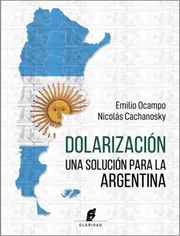
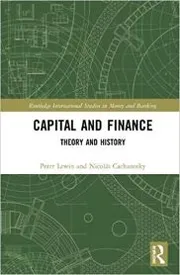
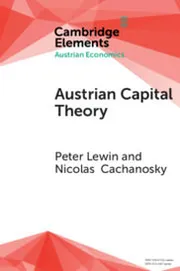
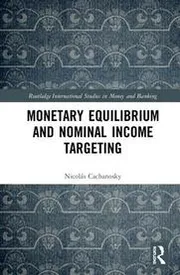
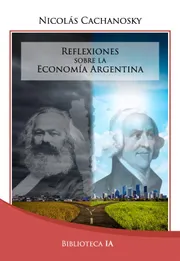
Books on money, capital, and Argentina.
Research-based talks for universities, policy, and business audiences.
Keynotes, lectures, panels, and briefings — in English or Spanish, in person or virtual.
- Keynote · Lecture
Dollarization and Monetary Regimes in Latin America
- Briefing · Panel
Argentina's Economy
- Keynote · Briefing
The Fed and Monetary Policy
- Lecture · Seminar
Populism and Institutions
Recent writing
- Argentina Climbed 11 Places in the 2026 Economic Freedom Index. One Variable Did Most of the Work.Economic Order
- The Boomerang Effect: Why Militarized Policing Didn't Start at HomeEconomic Order
- When Is a Disagreement a Paradigm War—And When Is It Just a Family Feud?Economic Order
- Argentina's House Just Passed a New Central Bank Charter. It Won't Be Enough.Economic Order
- Why Economists Make Bad CEOs (and Vice Versa)Economic Order
Get new essays by email.
I write Economic Order on economic policy and research: monetary policy, dollarization, Argentina, and political economy.